Start Care When Support Feels Timely
Early autumn can make it harder to set emotional concerns aside. Summer routines change, calendars fill with work, school, and caregiving demands, and stress may feel heavier as daylight shifts. When anxiety, grief, relationship strain, trauma responses, or a major life change is already taking up space, waiting for support can feel discouraging.
Finding a therapist sometimes involves wait times, especially for a preferred appointment time, office location, or area of focus. At Boundless Heart Counselling Group, we provide in-person counselling in Vancouver and virtual therapy across British Columbia. Both formats can be meaningful, and the best choice depends on your comfort, privacy, schedule, and current needs.
Telehealth Therapy in BC May Help You Start Sooner
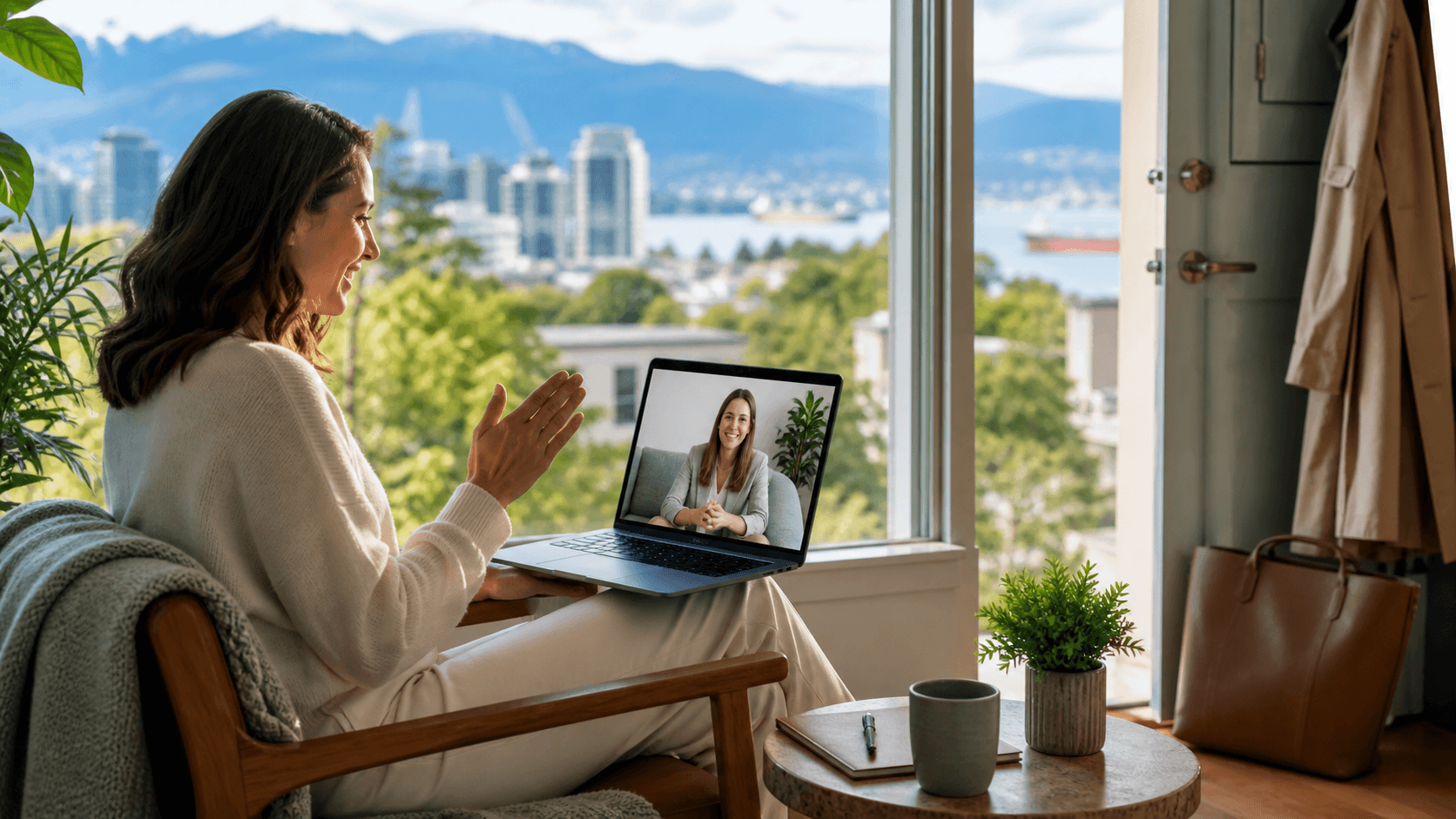
Telehealth therapy in BC can widen your appointment options because you are not limited by travel distance from a counselling office. A virtual session may help you connect with a therapist whose approach, availability, or experience feels aligned with what you want to work on. Availability still varies from therapist to therapist, though online care can create more flexibility for some people.
For many adults and couples, the practical side matters. Removing travel time can make it easier to protect space for counselling during a busy week. Virtual sessions may also fit more comfortably around family responsibilities, chronic illness, mobility concerns, or a demanding workday.
During the fall, extra pressure can build quickly. Starting therapy before stress feels unmanageable can give you a regular place to talk through what is happening in your life. Telehealth therapy in BC may be a workable option if you are dealing with concerns such as:
- Anxiety that is affecting daily routines
- Grief or changes in family life
- Relationship tension or communication difficulties
- Trauma-related feelings or responses
- A personal, health, work, or identity transition
Online counselling still requires dedicated time. Before choosing it, consider if you have a reliable internet connection, a device with a camera, and a setting where you can speak openly without being overheard.
Privacy, Comfort, and Fit for Virtual Sessions
A private space can make a significant difference in how comfortable online therapy feels. Some clients use a bedroom or home office, while others may sit in a parked vehicle or another location where the conversation is less likely to be interrupted. The goal is to choose a place that feels safe enough for honest discussion.
Small preparations can help you settle into a virtual session. We often suggest thinking ahead about headphones, silencing notifications, closing unneeded browser tabs, and letting people in your household know that you need uninterrupted time. These steps will not remove every distraction, though they can help protect the session.
Comfort with technology is another part of the decision. A basic device with a camera, steady internet, and some familiarity with video calls can support a smoother experience. Speaking with a therapist through a screen may feel unfamiliar at first, particularly when discussing painful or personal experiences. It can take time to find your rhythm.
Your therapeutic fit matters as well. Familiar surroundings may help you feel at ease and make therapy easier to fit into daily life. Some people feel more settled in a dedicated office, away from home responsibilities. Trauma history, attention needs, relationship concerns, privacy at home, and personal preference can all shape what feels supportive. During an initial consultation, we can talk through these details and consider which format suits your goals and environment.
What in-Person Care Can Offer in Vancouver
In-person counselling can offer a clear separation between therapy and the rest of the day. Travelling to an office may create space to shift your focus away from errands, work messages, household tasks, and caregiving. For some clients, the trip there helps them arrive more present. The time after a session can also offer a moment to reflect before returning to everyday responsibilities.
A consistent office setting may feel especially helpful if privacy is hard to find at home. Frequent interruptions, unreliable internet, shared living spaces, or difficulty focusing on video calls can all make telehealth less comfortable. Sensitive or emotional conversations may feel easier when you know you have a private place set aside for them.
Some clients also prefer the natural rhythm of face-to-face conversation. Sharing physical space with a therapist can feel grounding and can support a sense of focus during difficult discussions. Couples may appreciate being together in the same room while exploring communication patterns, conflict, intimacy concerns, or major decisions.
Waiting for an in-person opening can be a reasonable choice when the office setting feels important to you. It helps to consider how long you feel comfortable waiting, what you need in the meantime, and if temporary virtual support would feel useful while you wait.
Support Yourself During the Waiting Period
At Boundless Heart Counselling group, our team has immediate availability for in-person sessions. However, if you need to wait for in-person counselling, the time does not have to feel passive. Keeping brief notes can help you notice patterns and arrive at your first session with a clearer picture of what has been happening. You do not need to write a detailed record. A few simple observations can be enough.
Consider noting:
- Situations that increase stress, worry, sadness, or conflict
- Changes in sleep, energy, mood, or daily functioning
- Questions you would like to bring to counselling
- Relationship patterns that keep repeating
- Goals or hopes you have for therapy
Support from trusted people and existing health-care providers may also be helpful during the wait. Depending on your circumstances, a family doctor, nurse practitioner, community resource, or employee assistance program may offer guidance that fits your current needs. We encourage clients to build support around themselves rather than carrying difficult experiences alone.
Scheduled counselling is not a replacement for emergency or crisis care. If you are in immediate danger or feel unable to stay safe, call 911 or go to the nearest emergency department. In Canada, you can call or text 9-8-8 for suicide crisis support. The waiting period can also be a useful time to clarify your preferences and prepare for the work you hope to do in therapy.
Choose the Next Step That Feels Sustainable
Virtual therapy can provide timely support for many people, while waiting for in-person counselling may feel like the better fit for those who value an office setting, added privacy, or face-to-face connection. There is no single format that works best for every person or couple.
As you consider telehealth therapy in BC, think about your schedule, travel capacity, privacy, comfort with video calls, and the kind of setting that helps you feel present. A thoughtful choice can make it easier to begin care in a way that fits your life today and remains manageable over time.
Support That Fits Your Next Step
At Boundless Heart Counselling Group, we offer telehealth therapy in BC with care tailored to your needs and goals. Our team can help you understand the services available and find an approach that feels comfortable for you. When you are ready to begin, contact us to arrange a consultation.